Trophy Hunter - Sniper Game
- 4.6
- Rating
- 5.00M
- Installs
- Free
- Price

 Analysis by App-foxy
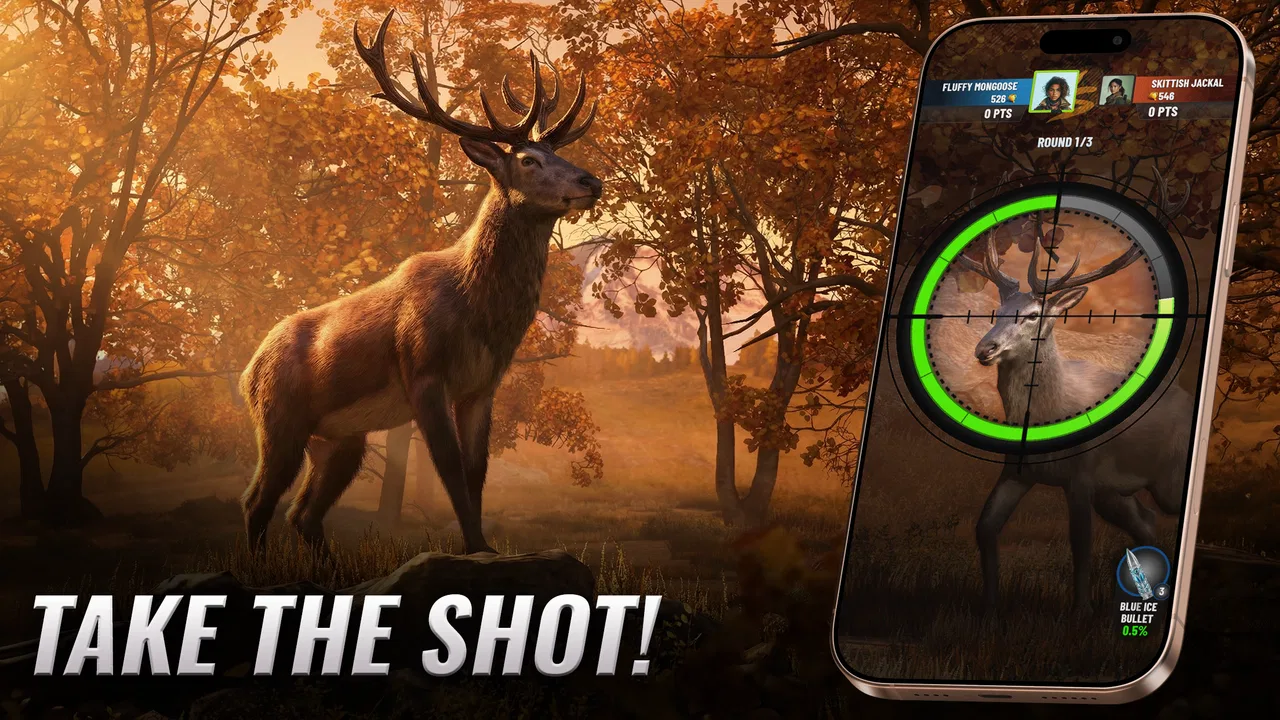
I went into Trophy Hunter – Hunting Game expecting a quick shooting diversion, and that is exactly where it makes the strongest impression. This is a free simulation game from Ten Square Games built around short 1v1 sniper encounters rather than a large open-world hunting adventure. You take a shot, read the result, collect the outcome, and then decide whether you can improve your next attempt. That compact cycle is the heart of the experience.
The game is aimed at players who enjoy precision, competition, and the small satisfaction of correcting a mistake. It is not trying to replace a detailed hunting simulator or a long story-driven action game. Instead, it turns the idea of a trophy hunt into a focused contest where your timing and aim matter immediately. I found that clarity refreshing, although it also means the experience can feel narrow if you want exploration, a deep campaign, or a slower nature-game atmosphere.
How the hunting duel feels from the first shot to the next match
I find that the best way to judge a hunting duel is to notice what the result teaches me, not just whether I win. A small pause to think about my timing can make the next attempt feel more deliberate, while also showing whether I enjoy this focused kind of competition. That practical rhythm matters even more when deciding how to get started and avoid common setup snags.
You May Also Like

 Blood Strike: 2.5 Anniversary
Blood Strike’s Loadouts Turn Every Drop Into a Tactical Gamble
A close look at Blood Strike’s custom loadouts: how fast access to signature weapons reshapes its battle royale rhythm, rewards preparation, and narrows the gap between fights.

 Pandora - Music & Podcasts
Pandora’s Music Is Easy to Start, but Harder to Recover
Pandora’s strength is its low-effort path from a seed to a station. Its weak spot is how much confidence it asks you to place in connection, setup, and quiet recovery.

 8 Ball Pool
 Is Built on Rivalries, Rematches, and Routine
A close look at the rivalries, rematches, shared routines, and unanswered safety questions that turn a quick pool match into a persistent mobile community.

 Samsung Music
’s Quiet Strength Is Playing What You Already Own
Its reach comes less from spectacle than from dependable access to a personal library. That simplicity is both the app’s strongest retention engine and its ceiling.

 AccuWeather: Weather Radar
AccuWeather Review: A Quick, Clear Forecast for Everyday Decisions
For everyday plans, the best forecast is the one you can understand quickly. AccuWeather makes rain timing, radar, and local conditions easy to act on, with a few trade-offs.

 Hill Climb Racing
Why Hill Climb Racing Still Turns Crashes Into One More Run
A tiny car, a bumpy hill and one more upgrade: Hill Climb Racing keeps resurfacing because its simple chaos makes every near-miss feel personal.
More From Our News Desk



The first action is simple, but the pressure arrives quickly
The opening appeal is easy to understand: enter a duel, line up the shot, and try to outperform another hunter. The controls are not buried under a long list of systems. That makes the first session approachable, especially for someone who wants a game that can be understood without studying a manual. The challenge does not come from learning dozens of buttons; it comes from making a good decision when the opportunity is in front of you.
That simplicity gives every shot a clear purpose. I am not wandering around hoping to discover the next objective. I am looking at the immediate contest and asking myself whether I should act quickly or take more care. A rushed attempt can be less satisfying than a controlled one, but waiting too long can also make the moment feel tense. The game works best when I treat each duel as a small test of attention rather than as an automatic tap-through activity.
The 1v1 format is especially important. In a conventional hunting game, the pleasure may come from tracking, scenery, equipment, or a long expedition. Here, the opponent changes the mood. Even when the action is brief, the result feels comparative: my performance is not judged only by whether I fired, but by whether I handled the opportunity better than the other side. That competitive framing gives the first action more weight than it would have in a solitary target range.
I also like that the central action is easy to explain to another person. If a friend asked what I was doing, I could describe it in one sentence: I was taking part in short sniper hunting duels and trying to improve my results. That focus helps the game get started quickly, but it also sets expectations. Anyone looking for a rich simulation of wildlife behavior may find this interpretation much more game-like than realistic.
Feedback arrives fast enough to teach you something
The most useful part of the loop is the feedback after a shot. A result is not just a win or loss that disappears before I can think about it. It gives me a reason to examine what happened and decide whether the next attempt should be calmer, faster, or more deliberate. That makes the game more engaging than a sequence of disconnected rounds.
My best advice is to avoid treating every miss as bad luck. In a game built around sniper skill, a disappointing result is valuable only if I use it to adjust my approach. I pay attention to the timing of my action, the way I handled the aiming moment, and whether I was playing too aggressively. This habit turns the feedback screen into part of the game rather than an interruption between matches.
The rhythm is appealing because it does not ask for a huge time commitment before showing whether I am improving. I can complete a brief session, understand the outcome, and decide immediately if I want another try. That makes it suitable for a commute, a break between tasks, or the few minutes before bed. It is also why the game can become repetitive: when the basic action is familiar, the motivation has to come from better performance and the next reward.
There is a subtle trade-off here. Fast feedback is excellent for learning, but it can reduce the sense of a long hunt. If I want anticipation built over a large landscape, the quick duel structure will feel too compressed. If I want a game that tells me right away whether my decision worked, the same structure becomes one of its strengths.
Rewards give the result a reason to matter
A successful duel feels better when it leads to more than a momentary victory. The trophy idea gives the action a sense of collection and progress, so the result has a visible purpose. I am not only trying to win one exchange; I am trying to build a record of successful hunts and become more consistent over time.
This is where the game’s simulation label makes sense in a light, game-focused way. It presents the fantasy of hunting through a repeatable progression loop rather than through a fully detailed survival or wildlife system. The reward is connected to the identity of the game: accurate shooting leads to trophies, and trophies make the next challenge feel worthwhile.
I found it useful to set a personal goal before starting a session. Instead of playing without direction, I might focus on avoiding rushed shots, protecting a winning streak, or simply finishing with a better result than the previous attempt. That approach makes the rewards feel less passive. The game supplies the contest, but I supply the short-term objective that keeps the session meaningful.
There is also a practical question about spending. The game is free to download and includes in-app purchases ranging from $0.49 to $99.99 per item. That broad range means players should decide early how they want to approach progression. I would begin without spending, learn whether the duel loop genuinely holds my attention, and only then consider whether optional purchases fit my habits. A free entry point is welcome, but a player who dislikes purchase prompts or progression pressure should be cautious.
The age rating is Teen, which is another reason I would not describe it as a universal family game. Parents should look at the store presentation and the purchase settings before handing it to a younger player. For adults and older teenagers who already enjoy competitive mobile games, the tone is easier to place: it is a stylized hunting contest focused on shooting skill and rewards.
The reset is what makes another session tempting
After a duel ends, the game’s strongest design choice is the invitation to start again. The reset is not merely a return to a menu; it creates a fresh chance to correct the last outcome. If I win, I want to see whether I can repeat the performance. If I lose, I have an obvious reason to try again. That is the classic action-feedback-reward-reset pattern, and this title keeps it visible.
The reset works particularly well after a near miss. A total failure can be discouraging, but a close result suggests that a small adjustment might change the next outcome. I often find that more motivating than a game where progress depends only on grinding. Here, the next session begins because the previous one gave me a specific question: can I aim more carefully, react more confidently, or avoid the mistake that cost me the duel?
At the same time, the reset can expose the limits of the format. If I am not interested in repeating a similar contest, there may be little else to pull me back. This is not the right choice for someone who needs a constantly changing map, a large narrative, or a broad range of activities. The game’s replay value depends heavily on whether improving at the core action is satisfying to me.
I would use it in short blocks rather than forcing a long marathon. A few focused rounds are enough to preserve the tension. Playing until every result feels automatic can make the loop lose its edge. The reset is most effective when I still have attention left to apply the lesson from the previous duel.
What version and device support mean in practice
The current version is 3.4.0, and the game supports Android 9 or newer. That makes the minimum operating-system requirement important for anyone using an older phone or tablet. Before planning to play, I would check the device’s Android version, especially if the device has been kept for several years. A game can be appealing and still be inconvenient if the phone cannot install it.
The title has reached over a million installs, with an average rating of 4.6 from around seventy-four thousand ratings. Those figures suggest that the focused duel concept has found a substantial audience, but they should not replace personal judgment. Players who enjoy competitive accuracy games are more likely to appreciate it than players who mainly want a relaxing digital nature walk.
Ten Square Games is the developer, and the game’s identity is clear enough that I never confuse it with a general hunting encyclopedia or a traditional shooting gallery. The store short description calls it “Trophy Hunter,” while the longer summary emphasizes sniper skill and 1v1 competition. In my experience, the important distinction is that the game’s appeal comes from the contest and the repeatable improvement cycle, not from pretending to offer every part of a real hunting trip.
Where it fits among other mobile hunting and simulation games
Compared with a conventional hunting simulator, this game is more immediate and competitive. A larger simulation may give me more time to explore, observe, and prepare, while this one pushes me toward a decisive encounter. That makes it a better fit for quick sessions and a weaker fit for players who want a slow, immersive expedition.
Compared with a standard sniper game, the trophy-hunting framing changes the emotional texture. The goal is not simply to clear enemies or finish an action mission. The reward structure points back to the hunt, and the duel format gives the result a personal comparison. Someone who likes shooting mechanics but wants a less conventional setting may find that combination appealing.
It also differs from idle or collection-focused games because the player’s immediate action remains central. Rewards matter, but they do not remove the need to perform in the duel. That is a useful distinction for anyone who has become tired of games where progress continues while the player barely participates. On the other hand, players who prefer automatic accumulation and very little pressure may find the demand for accurate decisions less relaxing.
The best alternative depends on what I want from the category. I would choose a larger hunting simulation for exploration and environmental immersion, an ordinary arcade shooter for faster action without the hunting theme, and a collection game for a calmer progression routine. I would choose this one when the specific combination of short contests, shooting precision, and trophy-driven replay is the main attraction.
Small habits that improve the experience
My first practical tip is to treat the first round as a calibration session. Rather than chasing a perfect result immediately, I use it to understand the pace of the encounter and how much attention the aiming moment deserves. That reduces the temptation to blame the game for a poor opening attempt and gives the next round a clear purpose.
Second, I avoid starting a new duel while distracted. Because the action is compact, it is easy to think a round can be played while doing something else. In reality, a short contest can demand more concentration than a slower game. If I am checking messages or rushing between tasks, the result tells me more about my attention than my skill.
Third, I separate improvement from spending. A disappointing result can create the urge to buy something immediately, but that does not answer the more important question: do I enjoy the actual duel? I would play enough free sessions to decide whether the feedback and reset loop are satisfying on their own. If they are not, a purchase is unlikely to solve the problem.
Finally, I keep the game in its intended scale. It is more enjoyable when I expect a focused contest rather than a complete hunting lifestyle. That expectation prevents the most common disappointment and lets the strengths stand out: quick entry, clear stakes, immediate feedback, and a natural reason to try again.
Who should play it, and who should skip it
I recommend it to players who like mobile games with a clear action and a measurable personal challenge. It is a good match for someone who enjoys testing accuracy, comparing results, and repeating a round because one small improvement might change the outcome. It also suits people who prefer sessions that can begin and end quickly without committing to a long campaign.
I would be more hesitant to recommend it to anyone seeking a realistic hunting experience. The game’s central attraction is the duel, not a detailed account of tracking animals across varied terrain. I would also point genre fans toward another option if they need extensive customization, a story, cooperative play, or a wide range of activities. Those expectations sit outside what makes this title distinctive.
Players who are sensitive to in-app purchases should approach it with a plan. The free starting point is useful for testing the game, but the listed purchase range reaches from small amounts to $99.99 per item. Setting a spending limit before playing is sensible, particularly because the reset loop is designed to make one more attempt feel attractive.
My verdict on the complete loop
The action-feedback-reward-reset structure is the reason I kept returning to Trophy Hunter – Hunting Game. The first shot is easy to understand, the result arrives quickly, the trophy theme gives the outcome meaning, and the reset creates a natural reason to test myself again. None of those parts is unusually complicated on its own, but together they form a focused mobile game with a clear personality.
Its main limitation is also its identity. The experience stays close to the 1v1 sniper contest, so players who need variety may reach the edge of its appeal sooner than precision-game fans. The Teen rating and in-app purchase range are worth keeping in mind, and Android users on older systems should check compatibility before installing.
With those expectations in place, I think this is a worthwhile free simulation game for short, competitive sessions. I would recommend trying it without spending first, playing with full attention, and judging it by one question: do I enjoy learning from the last shot enough to take the next one? If the answer is yes, the compact loop has enough tension and reward to keep another session feeling earned rather than automatic.
FAQs for Trophy Hunter - Sniper Game
01What is Trophy Hunter – Hunting Game all about?
Trophy Hunter – Hunting Game is an immersive simulation game where players can experience the thrill of hunting in various realistic environments. The game offers a range of weapons and gear, challenging missions, and diverse wildlife to track and hunt. It’s designed to provide a realistic hunting experience from the comfort of your mobile device.
02Is Trophy Hunter – Hunting Game free to play?
Yes, Trophy Hunter – Hunting Game is free to download and play. However, it contains in-app purchases that allow players to buy virtual currency or items to enhance their gameplay experience. These purchases are optional, but they can provide advantages such as advanced weapons or quicker progression through the game.
03What devices are compatible with Trophy Hunter – Hunting Game?
Trophy Hunter – Hunting Game is available for both Android and iOS devices. To ensure optimal performance, players should check that their device meets the minimum system requirements specified on the app’s download page. Typically, this includes having a recent OS version and sufficient storage space.
04How does the multiplayer feature work in Trophy Hunter – Hunting Game?
The multiplayer feature in Trophy Hunter allows players to compete against friends or other hunters worldwide in various challenges. Players can join hunting clubs, participate in tournaments, and track leaderboards to see how they rank globally. This feature requires a stable internet connection to function properly.
05Are there any safety concerns with Trophy Hunter – Hunting Game?
Trophy Hunter – Hunting Game is designed to be a safe and enjoyable experience. However, it’s important for parents to monitor in-app purchases, especially if children are playing. The game includes an option to disable purchases and set parental controls to ensure a responsible gaming environment.
Pros
- Realistic graphics and immersive environments.
- Varied animal species for diverse hunting.
- Intuitive controls enhance gameplay.
- Multiple hunting locations to explore.
- Regular updates with new challenges.
Cons
- In-app purchases can be expensive.
- Requires constant internet connection.
- Limited customization for hunting gear.
- Occasional bugs in multiplayer mode.
- High battery consumption during play.

Trophy Hunter - Sniper Game
Gallery